
An Environmental Product Declaration (EPD) is a comprehensive document that transparently communicates how a product affects the environment from cradle to grave. It is a Type III ecolabel as defined under ISO 14025.
An EPD quantifies environmental information about a product's life cycle, enabling comparisons between products that serve the same function. Every EPD is built on the principles of Life Cycle Assessment (LCA), giving it a scientific, standardized foundation.
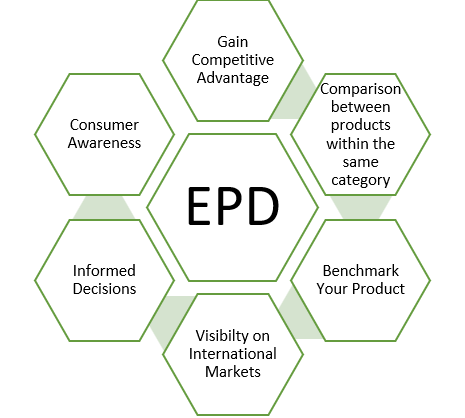

Brand, product name, and category — establishing exactly what the EPD covers.
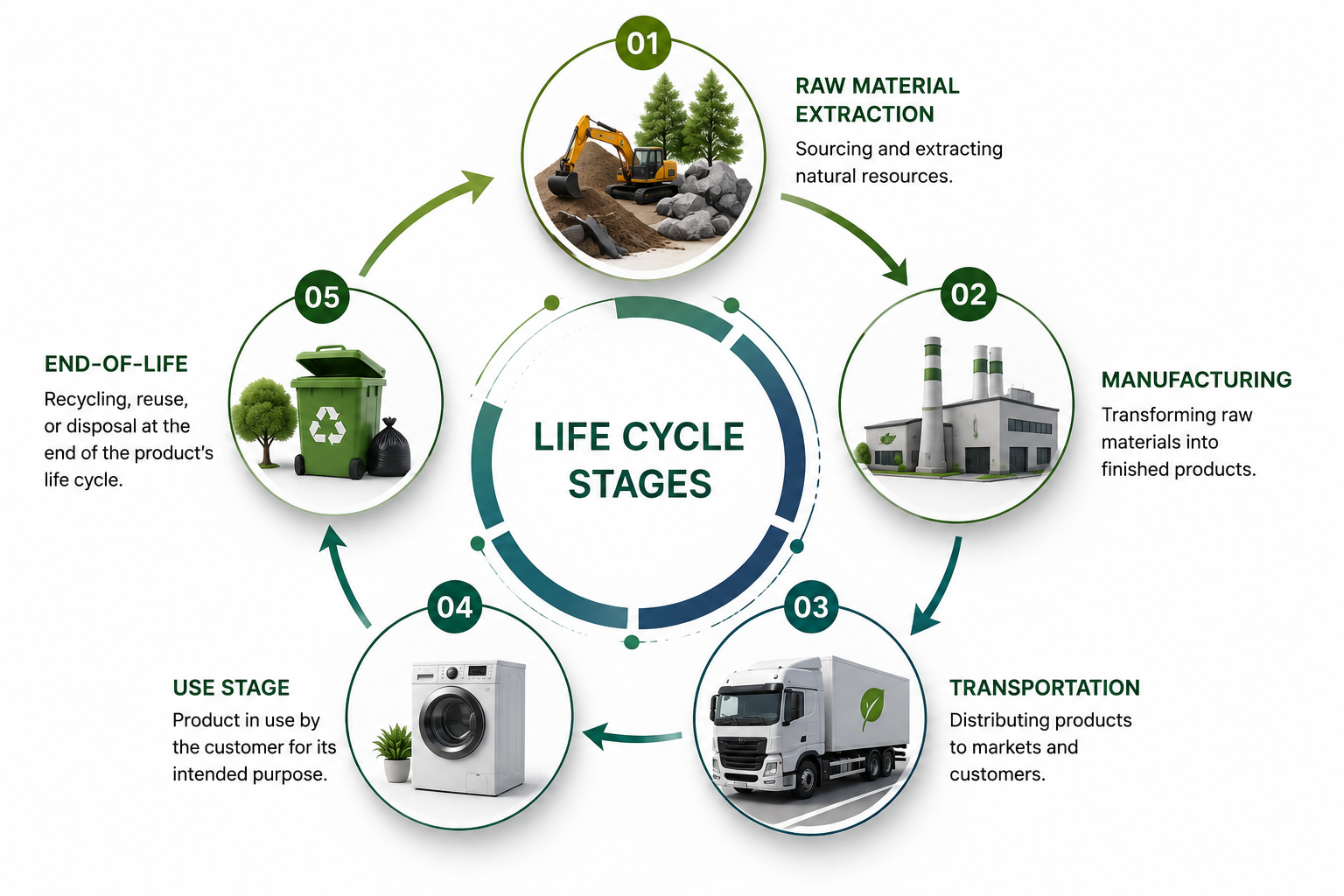
Raw material extraction, manufacturing, transportation, use, and end-of-life considerations, mapped stage by stage.
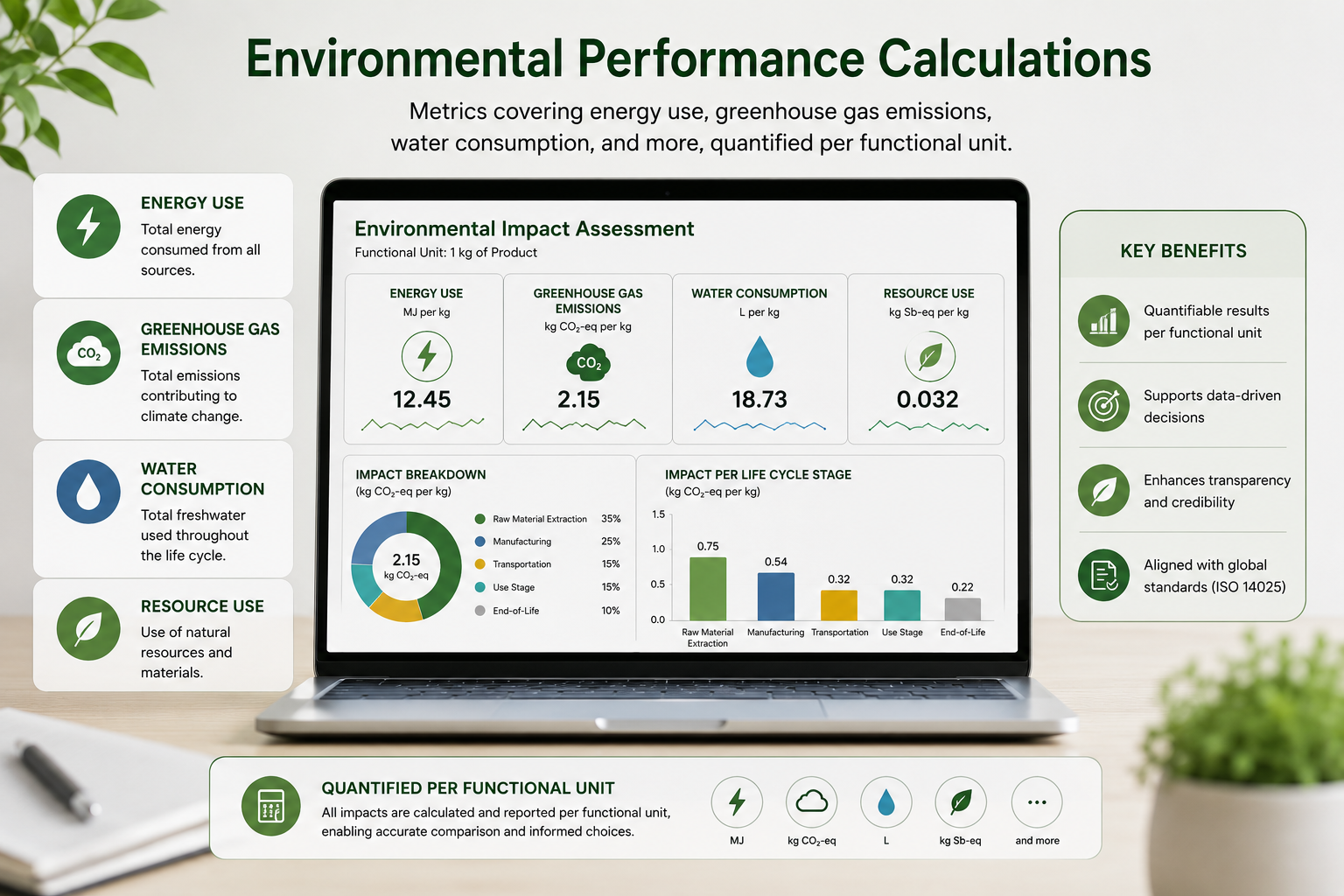
Metrics covering energy use, greenhouse gas emissions, water consumption, and more, quantified per functional unit.

Information on the sustainable practices associated with the product's design, sourcing, or manufacturing.
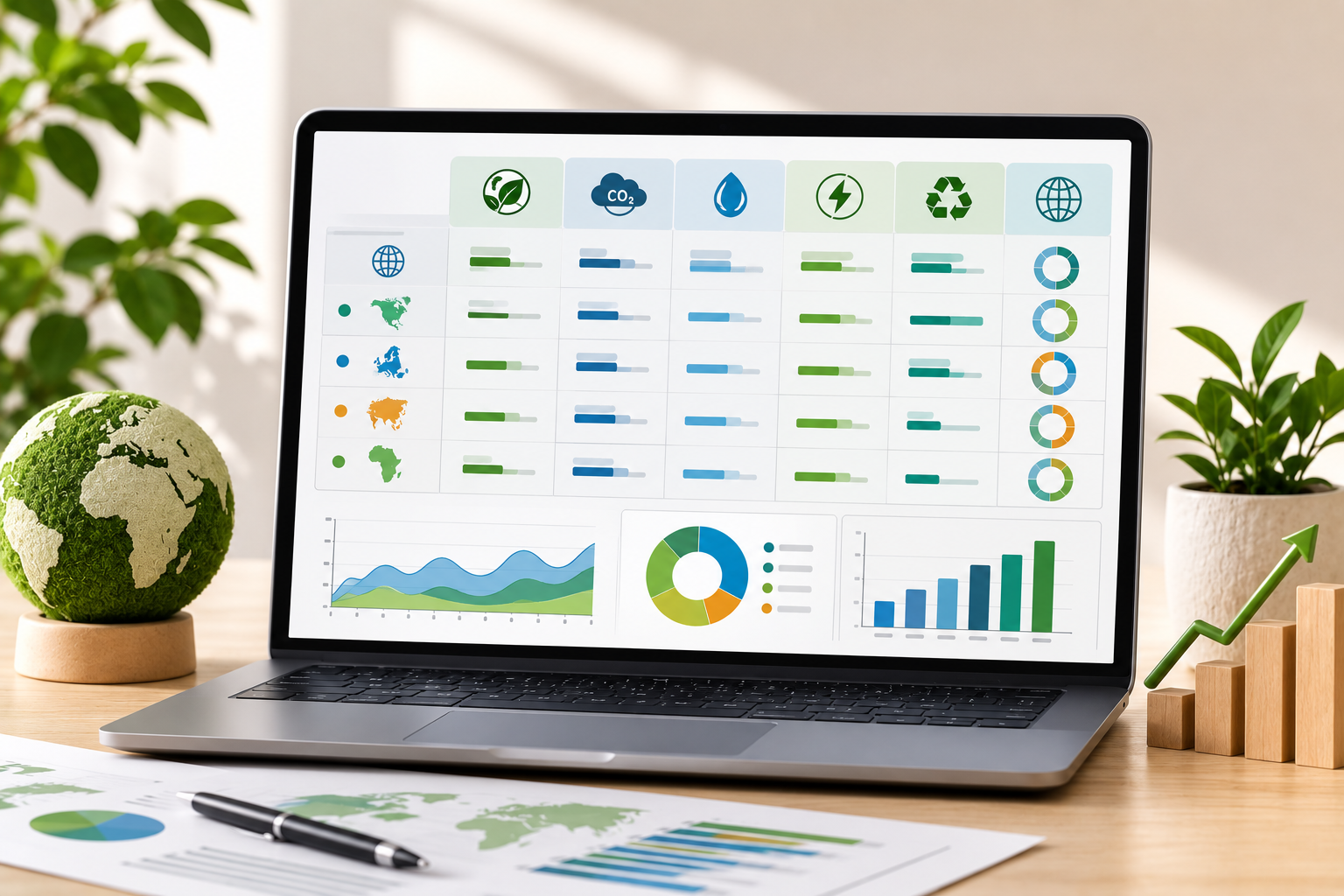
Consolidated tables summarizing environmental results, often broken down across different markets or regions.

Specific, category-level rules that an independent panel verifies, ensuring EPDs within the same category stay comparable.
From selecting the right Product Category Rule to final publication, every EPD follows a structured, verifiable path.

The relevant PCR is selected — a set of category-specific rules, verified by an independent panel, that governs how the LCA and EPD must be carried out.
LCA experts analyze inventory data using specialized software and assessment tools to quantify the product's environmental impacts.
The completed EPD undergoes independent third-party verification review, after which it is registered and published on the relevant EPD programme.
SIPL is an Approved Individual EPD Verifier, guiding you from PCR selection through SimaPro-based LCA modeling to final verification and publication.
Talk to Our Team